Prices, transport schedules, entry fees, accommodation rates, and immigration requirements can change. The budget figures in this guide are planning ranges rather than guaranteed prices. Check current rates with accommodation providers, transport operators, attractions, and official government sources before booking.
Budget Travel in Southeast Asia at a Glance
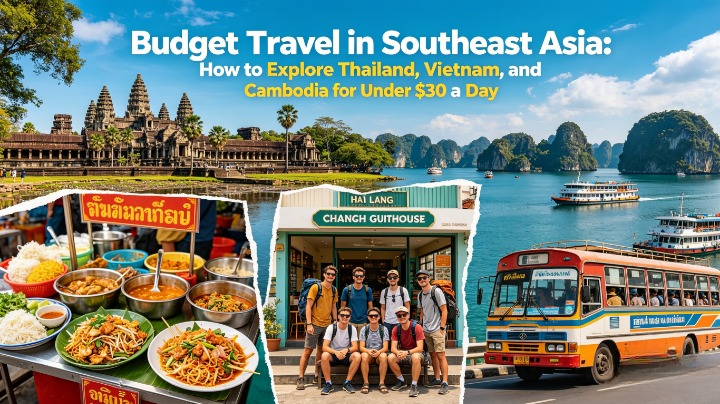
Thailand, Vietnam, and Cambodia can work well for travelers who want to keep daily spending under control while still experiencing local food, historic sites, markets, beaches, and regional transport. However, a $30-per-day target is a planning goal, not a universal price guarantee. Your actual spending will depend on the city, season, accommodation standard, transportation choices, activities, and travel style.
The key is not simply finding the cheapest option in every category. A more practical approach is to control the expenses that are easiest to manage while avoiding unnecessary transfers and choosing destinations that match your budget.
What Can a $30 Daily Budget Cover?
In lower-cost destinations, a budget of around $30 per person per day may be enough for a simple private room or dorm bed, local meals, basic city transportation, and selected low-cost attractions. In more expensive resort areas or during peak travel periods, the same target may require compromises.
| Category | Planning Range | How to Keep Costs Controlled |
|---|---|---|
| Accommodation | $6–$14 | Compare dorms, guesthouses, and simple private rooms outside premium tourist zones. |
| Food & drinks | $7–$12 | Prioritize local restaurants, markets, and inexpensive meals. |
| Local transport | $3–$7 | Use public transport, walking, shared rides, and app-based services where practical. |
| Activities | $2–$6 | Mix free attractions with selected paid sites. |
| Miscellaneous | $1–$4 | Allow for water, laundry, mobile data, and small unexpected expenses. |
These ranges are for trip planning only. They do not include international flights, travel insurance, visas where applicable, major tours, alcohol, or expensive resort stays.
How Can You Keep a Southeast Asia Trip Within a Tight Budget?
- Stay longer in each destination. Frequent transfers add transportation costs and reduce the time available for exploring.
- Compare accommodation by total value. A slightly more expensive room near public transport can sometimes cost less overall than a cheaper room requiring frequent taxis.
- Eat locally. Local restaurants and markets often provide more budget-friendly options than international restaurants in tourist districts.
- Use public transportation when practical. Check the current fare and operating information for the city before traveling.
- Mix free and paid activities. Parks, markets, walking routes, neighborhoods, beaches, and public spaces can complement ticketed attractions.
- Keep a daily spending limit. Tracking small purchases makes it easier to see when transport, drinks, or spontaneous activities are pushing the budget upward.
If you are considering hostels specifically, see our budget hostel recommendations in Southeast Asia for a more focused accommodation comparison.
Which Parts of Thailand Can Work for Budget Travelers?
Thailand offers a wide range of travel styles. Bangkok and popular islands can become expensive, while northern and less-visited destinations may provide more opportunities for budget accommodation and local transportation.
Bangkok
- Compare accommodation in areas with convenient access to BTS, MRT, river transport, or major bus routes.
- Use public transportation for longer city journeys when routes are convenient.
- Explore markets, parks, temples, and neighborhoods alongside paid attractions.
- For taxis and app-based rides, confirm the fare or payment method before starting the journey.
Chiang Mai and Northern Thailand
- Chiang Mai can be useful for travelers who want a slower pace and a large selection of guesthouses and local restaurants.
- Old City temples, markets, and public spaces provide plenty of activities that do not require large admission fees.
- For trips outside the city, compare shared transport, organized tours, and independent travel before booking.
- If renting a motorbike, check that you meet local licensing requirements and understand the insurance conditions before riding.
What Should You Know About Thailand’s Islands?
Island travel can quickly increase a daily budget because of ferries, transfers, beachfront accommodation, and activities. Travelers on a strict budget should compare the total cost of reaching and staying on an island rather than looking only at the room rate.
- Compare several islands before committing to a route.
- Consider accommodation slightly away from the busiest beachfront areas.
- Check ferry schedules and baggage policies before traveling.
- Leave room in the budget for transfers between ports, hotels, and airports.
What Thailand Budget Mistakes Should You Avoid?
- Do not assume every tuk-tuk or taxi quote is the final price.
- Use established transport options and confirm fares before departure.
- Compare tour inclusions carefully so that transportation, entrance fees, meals, and optional charges are clear.
- Do not choose accommodation solely because it has the lowest nightly rate.
Which Parts of Vietnam Can Work for Budget Travelers?
Vietnam can be attractive for budget travelers because local food, simple accommodation, and several forms of domestic transportation can be relatively affordable. Costs still vary significantly between major tourist destinations, remote areas, and different seasons.
Hanoi
- Stay within walking distance of major attractions or convenient public transport when possible.
- Explore local food streets and neighborhood restaurants instead of relying exclusively on international dining venues.
- Hoan Kiem Lake and several central neighborhoods can be explored on foot.
- For day trips and excursions, compare independent transport with organized tours before booking.
Hoi An and Central Vietnam
- Hoi An can be combined with nearby beaches and surrounding countryside.
- Consider staying outside the most expensive central areas if walking or cycling remains convenient.
- For Hue and Da Nang, compare train, bus, and other available transport options based on time and total cost.
- Check current admission fees for historical sites before building them into your daily budget.
Ho Chi Minh City and the Mekong Delta
- Use a combination of walking, public transport, and app-based rides depending on distance and convenience.
- Local markets and neighborhood restaurants can offer inexpensive meal options.
- For Mekong Delta trips, compare the itinerary, transport, meals, and group size rather than choosing only by headline price.
What Vietnam Budget Mistakes Should You Avoid?
- Confirm the currency and number of zeros when paying in Vietnamese dong.
- Check the final rental price and required documentation before hiring a motorbike.
- Read tour inclusions carefully and ask about additional entrance or transfer fees.
- Use reputable accommodation and transportation providers, particularly for longer journeys.
Which Parts of Cambodia Can Work for Budget Travelers?
Cambodia can fit a budget itinerary well, but major attractions such as Angkor can represent a larger portion of a traveler’s daily spending. Planning the length of the visit around the attractions you actually want to see can make the overall budget easier to manage.
Siem Reap and Angkor
- Check the current Angkor Enterprise ticket options before deciding how many days to spend at the archaeological park.
- Compare bicycle, tuk-tuk, and other transportation options based on the distance and number of temples planned.
- Stay outside the most expensive hotel areas if the location still provides practical access to the town center and transport.
- Allow additional spending for longer temple routes or private transportation.
Phnom Penh
- Combine major historical attractions with markets, neighborhoods, and public spaces.
- Compare accommodation around the areas you plan to visit rather than choosing only by nightly price.
- For app-based transport or tuk-tuks, confirm the price and destination before beginning the ride.
Kampot and Kep
Kampot and Kep can be useful additions for travelers interested in a slower pace, food, countryside scenery, and coastal experiences. Transportation between destinations should be included in the overall budget rather than treating each location’s accommodation price separately.
What Cambodia Budget Mistakes Should You Avoid?
- Confirm attraction and transportation prices before paying.
- Be cautious of unsolicited offers that redirect you to shops or attractions you did not request.
- Use safe drinking-water practices and follow local health guidance.
- Keep small denominations available for everyday purchases where appropriate.
What Could a Practical 25-Day Southeast Asia Budget Route Look Like?
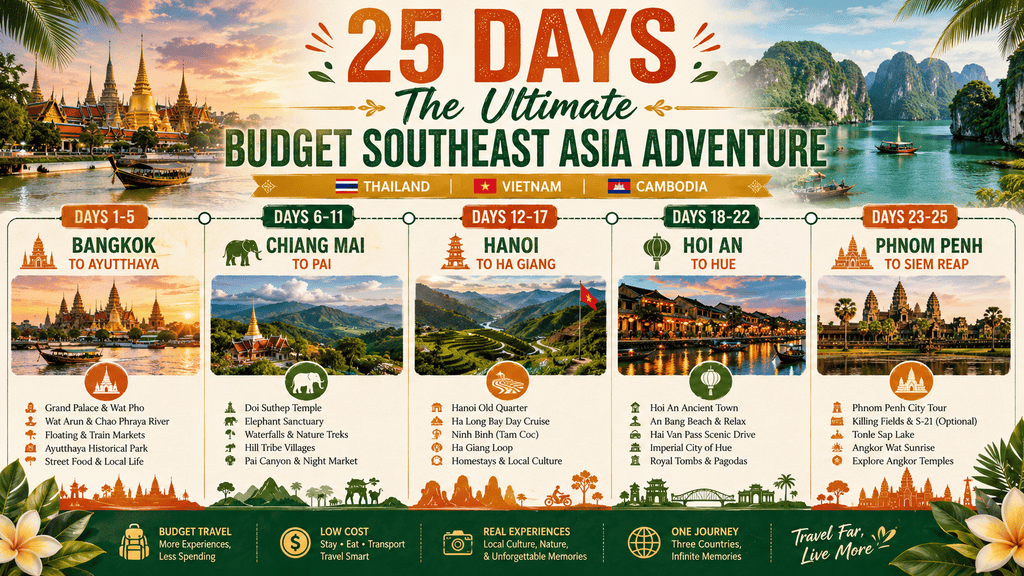
The following route is an example rather than a fixed prescription. It is designed to reduce unnecessary backtracking while giving enough time to experience several destinations across Thailand, Vietnam, and Cambodia.
| Days | Route | Planning Focus | Highlights |
|---|---|---|---|
| 1–5 | Bangkok → Ayutthaya | City transport and local food | Temples, markets, historic sites |
| 6–11 | Chiang Mai → Pai | Longer stay and regional transport | Temples, mountains, markets, countryside |
| 12–17 | Hanoi → Northern Vietnam | Excursion and intercity transport | Old Quarter, local food, mountain scenery |
| 18–22 | Hoi An → Hue | Central Vietnam transport | Historic streets, beaches, imperial heritage |
| 23–25 | Phnom Penh → Siem Reap | Cross-border planning and attractions | History, markets, Angkor temples |
Cross-border transportation, visas or entry requirements, accommodation, and attraction fees are not included in a fixed $30-per-day promise. Check each country’s current requirements and prices before booking the route.
How Can You Control Transportation Costs?
- Compare total journey cost. A cheaper ticket is not always cheaper after airport transfers, baggage, and local transportation are added.
- Use overnight transportation selectively. A night bus or train can reduce accommodation needs, but comfort and safety should come first.
- Group compatible destinations. Staying in one region longer reduces the number of long transfers.
- Check official schedules. Departure times and fares can change, particularly around holidays and peak periods.
- Do not assume advance booking always means a lower price. Compare the current fare and booking conditions for the specific operator.
How Can You Eat Well Without Overspending?
- Choose busy local restaurants where appropriate and look for clear menus or posted prices.
- Markets can be useful for inexpensive meals, fruit, and snacks, but normal food-safety precautions still apply.
- Keep a separate allowance for drinks, coffee, and snacks because small purchases can significantly affect a tight daily budget.
- International restaurants and imported products generally require more budget than local alternatives.
- Ask about portion sizes before ordering if you are trying to avoid unnecessary waste.
How Should You Choose Affordable Accommodation?
- Compare location and transport. A room farther from the center may not save money if you need frequent paid rides.
- Check recent reviews. Look specifically at cleanliness, noise, air conditioning, security, and internet reliability if those features matter to you.
- Understand what is included. Taxes, breakfast, deposits, laundry, and other charges can affect the final cost.
- Consider longer stays. Some properties offer different rates for multiple nights, but compare the final total rather than assuming a discount exists.
How Can You Protect Your Money While Traveling?
Payment habits vary between destinations and businesses. Carry a practical amount of local cash while keeping a secure backup payment method. Use ATMs and currency exchanges carefully, check fees before confirming a transaction, and avoid carrying all of your money in one place.
- Keep digital and physical copies of important travel documents.
- Use reputable transportation providers where possible.
- Confirm prices before accepting private transport or informal services.
- Keep valuables secure in crowded markets and transport hubs.
- Consider travel insurance appropriate for your activities and destination.
For broader international travel precautions, document security, and practical safety planning, see our Secure Travel Safety Handbook.
What Budget Mistakes Can Quickly Push a $30 Target Off Track?
- Setting an unrealistic daily target: Build a small buffer for unexpected costs.
- Moving too quickly: Frequent transfers increase both transportation costs and fatigue.
- Ignoring location: Cheap accommodation can become expensive when daily transport is added.
- Booking without checking inclusions: Tour and room prices can exclude transfers, meals, taxes, or entrance fees.
- Skipping insurance: An inexpensive trip can become very expensive after an accident, cancellation, or other major disruption.
What Should You Check Before Leaving?
- Set a realistic daily target based on the destinations you actually plan to visit.
- Reserve enough money for long-distance transportation and major attractions.
- Compare accommodation by total trip cost, not just nightly price.
- Use local food and public transportation where practical.
- Track spending during the trip and adjust the following days if necessary.
- Keep a financial emergency buffer outside your daily spending allowance.
- Check current immigration, health, transportation, and attraction information before departure.
Conclusion
Thailand, Vietnam, and Cambodia can offer strong value for travelers who plan carefully, but affordable travel does not mean every destination will fit the same daily budget. A $30 target works best as a framework for controlling routine expenses rather than as a promise of a fixed travel cost.
The biggest savings usually come from staying longer, choosing accommodation carefully, eating local food, comparing transportation options, and being selective about paid activities. Build your itinerary around those principles, keep a financial buffer, and verify current prices and entry requirements before you travel.
If you are planning a shorter multi-city trip and want a broader itinerary framework, see our 14-day global itinerary for another planning approach.
Happy travels across Southeast Asia! 🌏