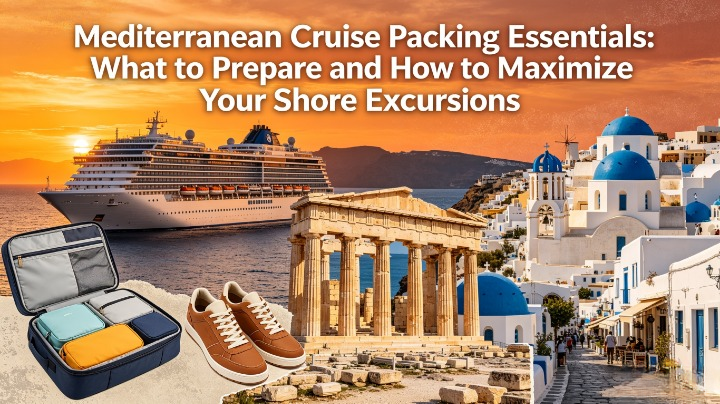
Planning note: Cruise fares, baggage allowances, dress codes, port procedures, excursion schedules, and onboard facilities vary by cruise line, ship, itinerary, and travel date. Check the current information provided by your cruise line and each destination before departure.
Mediterranean Cruise Packing & Port Planning Guide
A Mediterranean cruise combines time onboard with short visits to coastal cities, historic sites, beaches, islands, and cultural attractions. Packing for this type of trip requires more planning than a conventional city break because the same suitcase may need to cover warm weather, cooler evenings, walking tours, swimming, onboard dining, and different dress expectations.
The most useful approach is to build a flexible packing and planning system around your itinerary rather than packing for every possible situation. Comfortable footwear, lightweight clothing, sun protection, travel documents, medication, and a small day bag are generally more useful than bringing large quantities of specialized clothing.
This guide explains how to prepare before departure, organize your luggage, choose practical clothing and footwear, plan shore excursions, compare excursion options, and manage port days without relying on fixed prices or cruise-line rules that may change.
Why Does a Mediterranean Cruise Require Flexible Packing?
- Different destinations: One itinerary can combine major cities, islands, archaeological sites, beaches, and smaller coastal towns.
- Changing conditions: Weather can vary between regions and seasons, while sea breezes can make evenings feel cooler than expected.
- Walking-heavy excursions: Historic centers often include cobblestones, stairs, uneven paths, and pedestrian-only streets.
- Onboard and shore activities: A useful suitcase needs to work for sightseeing during the day and normal ship activities in the evening.
- Limited time in port: Shore visits follow the ship’s schedule, so practical organization can make it easier to leave and return on time.
What Should You Check Before a Mediterranean Cruise?
| Planning Area | What to Consider |
|---|---|
| Season | Spring, summer, and autumn can offer different temperatures, crowds, and weather conditions. |
| Destinations | Common itineraries may include ports in Spain, France, Italy, Croatia, Greece, Türkiye, or other Mediterranean destinations. |
| Clothing | Choose lightweight layers that can work for both sightseeing and onboard activities. |
| Footwear | Prioritize comfortable walking shoes suitable for uneven streets and long sightseeing days. |
| Documents | Check passport validity, visa requirements, cruise documents, and destination-specific entry rules before departure. |
| Ship policies | Check your specific cruise line for baggage limits, prohibited items, dress expectations, and electrical restrictions. |
How Should You Prepare Before Departure?
Documents and Travel Information
- Passport: Check the validity period required for your cruise itinerary and every country you will visit.
- Visa or entry requirements: Requirements depend on nationality, itinerary, and destination. Verify them through official government sources before departure.
- Cruise documents: Keep your boarding information and required travel documents accessible during embarkation.
- Travel insurance: Consider coverage for medical treatment, emergency assistance, trip interruption, and other risks relevant to your trip. Check the policy conditions carefully.
- Payment methods: Bring a suitable payment card and a small amount of local currency when useful for your itinerary.
- Copies of important documents: Keep secure digital or paper copies separately from the originals.
Broader international safety planning: Before departure, our Secure Travel Safety Handbook covers practical precautions for protecting personal data, wallets, and important travel documents while travelling internationally.
How Can You Prepare for Different Weather Conditions?
Mediterranean weather varies by destination and season. Instead of relying on a single regional temperature range, check the forecast for each port shortly before departure and again during the cruise when practical.
| Season | General Planning Considerations |
|---|---|
| Spring | Generally suitable for layering; rain and cooler evenings can occur. |
| Summer | Prepare for strong sun and warm conditions, especially during midday sightseeing. |
| Autumn | Conditions can remain warm in many destinations, while evenings may become cooler. |
What Cruise-Line Rules Should You Check?
Cruise lines can differ significantly in their baggage allowances, prohibited items, dining dress expectations, electrical rules, and laundry facilities. Before packing, read the current guest information for your specific ship rather than relying on a general cruise packing list.
- Check the current baggage allowance.
- Review prohibited and restricted items.
- Check dining-room and evening dress guidance.
- Confirm whether self-service laundry is available.
- Check cabin electrical outlets and permitted charging equipment.
What Should You Pack for a Mediterranean Cruise?
Clothing for Days Ashore
- Lightweight tops suitable for warm weather.
- Comfortable trousers, shorts, skirts, or other suitable bottoms.
- A lightweight layer for cooler evenings and air-conditioned interiors.
- Swimwear if your itinerary includes beaches, pools, or water activities.
- A lightweight cover-up or modest layer for visiting religious or culturally sensitive sites.
- A compact rain jacket or shell when the forecast and season make it useful.
What Should You Pack for Evenings Onboard?
Evening requirements vary between cruise lines and ships. Pack at least one outfit suitable for a more formal or special evening if your itinerary includes such events, but check your cruise line’s current dress guidance before departure.
- Smart-casual clothing for normal evenings.
- One more polished outfit if required or desired for formal or special dining.
- Comfortable sleepwear and loungewear.
Which Footwear Is Most Practical?
Footwear can make a significant difference on Mediterranean shore days. Historic districts may involve cobblestones, stairs, steep streets, and extended periods of walking.
- Walking shoes: Bring one well-tested pair with good grip and adequate support.
- Casual evening shoes: Choose a pair that works with more than one outfit.
- Water-friendly footwear: Useful for rocky beaches or water-based activities when appropriate.
- Pool footwear: Useful for ship pool areas where permitted.
What Toiletries and Health Essentials Should You Bring?
- Sunscreen suitable for your activities and skin type.
- Sunglasses and a hat for sun protection.
- Prescription medication in its original packaging.
- Basic personal first-aid supplies, including blister protection if useful.
- Motion-sickness products if you are prone to seasickness and can safely use them.
- Personal hygiene products that may not be convenient to purchase during a short port visit.
What Technology and Travel Gear Can Make Port Days Easier?
- Travel adapter compatible with your cruise ship and destinations.
- Phone charger and, where permitted, a suitable power bank.
- Small daypack for shore excursions.
- Water-resistant phone pouch for beach or boat activities.
- Offline maps or downloaded travel information for ports where mobile coverage may be limited.
- Packing cubes or small organizers.
- Laundry bag for used clothing.
- Reusable water bottle where permitted and practical.
- Small reusable tote bag for purchases or beach items.
- Luggage tags with current contact information.
How Can You Pack More Efficiently?
- Choose versatile clothing: Select pieces that can be combined into several outfits.
- Limit duplicate items: Two similar jackets or several pairs of nearly identical shoes usually add unnecessary weight.
- Use packing organizers: Keep clothing, electronics, and toiletries separated so items are easier to find.
- Wear bulky footwear during travel: When comfortable and practical, wearing heavier shoes can leave more luggage space.
- Keep essential items accessible: Medication, travel documents, valuables, and items needed during embarkation should not be buried in checked luggage.
- Leave some space: A little extra room can be useful for souvenirs or items purchased during the trip.
How Should You Plan Your Shore Excursions?
Shore excursions require a different planning approach from ordinary sightseeing because your time ashore is controlled by the ship’s schedule. The best plan balances the attractions you want to see with realistic travel time, opening hours, transport connections, and a safe margin for returning to the port.
Which Shore Excursion Option Fits Your Trip?
| Option | Advantages | Things to Consider |
|---|---|---|
| Ship-organized excursion | Convenient transport, organized timing, and a structured itinerary. | Usually follows a fixed schedule and may allow less flexibility. |
| Independent visit | More control over pace, route, and attractions. | You are responsible for transport, tickets, timing, and returning to the ship. |
| Private tour | Can offer a customized route and smaller-group experience. | Costs and availability vary, and timing must be managed carefully. |
What Should You Research Before the Ship Departs?
- Check the port’s actual location and distance from the main attractions.
- Check attraction opening hours and reservation requirements.
- Estimate travel time in both directions.
- Check whether public transport, taxis, or organized transfers are practical.
- Confirm the ship’s all-aboard time and plan to return with a reasonable buffer.
What Should You Consider at Different Mediterranean Ports?
The following examples are planning ideas rather than fixed schedules. Port arrangements, attraction hours, traffic, and cruise timetables can change, so confirm the details for your specific sailing.
- Barcelona: Prioritize one or two major attractions rather than trying to cover the entire city during a short port call.
- Rome from Civitavecchia: Account for the distance between the port and central Rome and allow enough time for the return journey. For broader historical and practical context before choosing what to see, see our Rome and Vatican Guide.
- Dubrovnik: Historic streets and city walls can involve stairs and uneven surfaces, so comfortable shoes are especially useful.
- Athens from Piraeus: Check the current transport situation and attraction entry requirements before leaving the port.
- Santorini: Consider transport time, crowds, terrain, and the method of getting between the port area and the island’s main viewpoints.
How Can You Manage Your Time Ashore?
- Download maps and important tickets before leaving the ship.
- Carry water and weather-appropriate clothing.
- Keep your itinerary realistic rather than filling every available minute.
- Know the location of the meeting point if you are taking an organized excursion.
- Set a reminder before the planned return time.
- Allow additional time for unexpected traffic, queues, transport delays, or changes in port arrangements.
What Common Cruise Packing Mistakes Should You Avoid?
- Packing too many shoes: Prioritize comfortable footwear that can serve several purposes.
- Ignoring religious-site etiquette: Some churches and religious sites have clothing expectations. Check the rules for each attraction.
- Forgetting weather layers: Warm daytime conditions do not guarantee warm evenings.
- Assuming every port is walkable: Cruise terminals can be outside the main city center.
- Overbooking shore activities: A packed schedule leaves little flexibility when transport or attraction timings change.
- Relying on outdated cruise rules: Always check your cruise line’s current guest information.
How Should You Prepare for Life Onboard?
Life onboard can be very different from time ashore. Many ships offer restaurants, pools, entertainment, fitness facilities, and organized activities, but access and dress expectations vary by vessel.
- Review the daily onboard schedule so you know which activities require reservations.
- Check the dress guidance for restaurants and special events.
- Keep comfortable clothing available for sea days and evenings.
- Use sea days to organize photos, recharge devices, review the next port, and repack your day bag.
- Check onboard announcements for changes to arrival times, port procedures, or excursion arrangements.
What Should You Check Before Leaving for Your Cruise?
- ☐ Passport and required travel documents
- ☐ Cruise boarding information
- ☐ Travel insurance information
- ☐ Comfortable walking shoes
- ☐ Lightweight clothing and weather layers
- ☐ Swimwear if required for your itinerary
- ☐ Sun protection
- ☐ Prescription medication and personal health supplies
- ☐ Phone, charger, and compatible travel adapter
- ☐ Small daypack for shore excursions
- ☐ Offline maps and pre-booked attraction information
- ☐ Current cruise-line rules and itinerary information
Example: What Could a 7-Day Mediterranean Cruise Look Like?
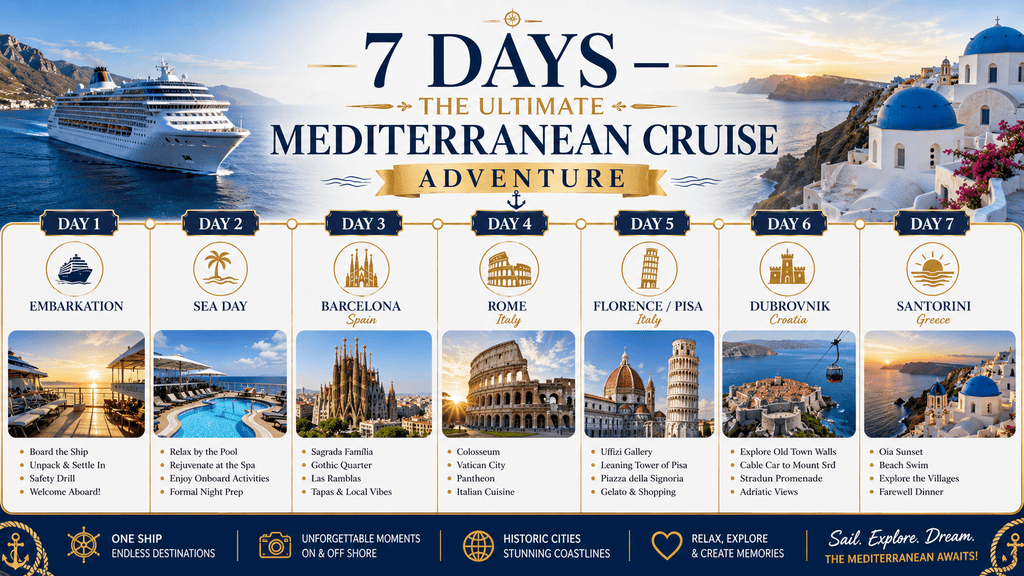
This sample itinerary is an example of how a seven-day cruise could be organized. Actual port sequences, arrival times, and available excursions depend on the cruise line and sailing date.
Planning a wider multi-destination trip? Our 14-Day Global Itinerary provides another framework for organizing several destinations within a limited travel window.
| Day | Focus | Planning Ideas |
|---|---|---|
| 1 | Embarkation | Board the ship, complete required procedures, settle into the cabin, and review the onboard schedule. |
| 2 | Sea Day | Use the day to relax, organize belongings, review the next port, and prepare for shore activities. |
| 3 | Barcelona | Choose a manageable combination of major sights and allow time for transport back to the port. |
| 4 | Rome Area | Plan the journey between Civitavecchia and Rome carefully and prioritize a limited number of attractions. |
| 5 | Florence or Pisa | Choose one main objective if the port call is short rather than trying to cover both destinations. |
| 6 | Dubrovnik | Explore the historic area while allowing for walking, stairs, crowds, and the return journey. |
| 7 | Santorini | Plan around transport, terrain, crowd levels, and the ship’s final all-aboard time. |
Final Thoughts
A successful Mediterranean cruise packing strategy is less about bringing everything and more about bringing items that can serve several purposes. Comfortable footwear, adaptable clothing, essential documents, medication, sun protection, and a practical daypack form a useful foundation for many itineraries.
Good shore planning is equally important. Check the distance between the port and major attractions, verify opening hours and reservation requirements, compare the excursion options available to you, and leave enough time to return before the ship’s stated all-aboard time.
Because cruise policies, port schedules, entry requirements, and attraction information can change, always confirm current details with the cruise line and relevant official sources before departure.